Courtesy of Fighters Generation
|
By A’Gia Alston
Console Release Date: 6/2/2017 ( PS4, PS4 Pro, XBox One, Steam)
Availability: Digital, Hard-Copy
System: XBox One
Developer: Bandai Namco
2017 has been a jam-packed year for the Fight Game Community and we are only a week into the halfway point. Bandai Namco gave fans a succulent morsel last week with the console release of Tekken 7― barely a month before the annual Evolution Championship Series 2017. The latest installment in the Tekken series serves as “...the final chapter of the 20-year-long Mishima feud...” between Heihachi Mishima and Kazuya Mishima. There are new editions to the character roster, story, and signature gameplay style Tekken is known for. I had a chance to get my grubby little paws on this sure-to-be “Greatest Hit” so, let us dive in!
POTENTIAL SPOILERS AHEAD
KEEP SCROLLING AND YOU HAVE SIGNED THE WAIVER
Mechanics
Most reviewers tend to discuss graphics first, but I prefer the main course to dessert and appetizers. A game can look great, but pleasing aesthetics are meaningless if gameplay mechanics are cumbersome and laggy.
If you are reading this, we can safely presume you have an interest in fighting games. Beginners and professionals know just how intimidating learning a fight game can be. "The Tao of Git Gud" specifically addresses how practicing repetitive inputs until said directives are second nature is imperative to “getting good” at your game of choice. Nothing hinders a fight game more than delayed inputs.
Boy oh boy do I have a few gripes with Tekken 7 about this exact issue.
Emelie “Lili” Rochefort is one of my favorite characters in the series. If I had to explicitly state who I tend to main, it would be her. Bandai Namco has kept most of the roster’s input commands the same for at least three installments. I have been playing Lili since her debut in Tekken 5: Dark Resurrection, thus her move set is familiar to me. Tapping Up+LK+RK (Up, Left Kick button, Right Kick button simultaneously) in Dark Resurrection results in a front tuck somersault either onto an opponent’s head if they are close enough, our a low attack if the opponent is just within range. The same input applies in Tekken 6. I spent FOUR DAYS playing Tekken 7, inputting that command, and saw every move except that. On the fourth day, I swallowed my pride and hunted through the command list until I found the move.

Courtesy of Fighters Generation
Guess what the input was? Up+LK+RK.
You can imagine my frustration. Unfortunately, this inconsistency applies to basic movements like side-stepping too. Double-tapping Up or Down usually yields a side step into the foreground or background. Well, in Tekken 7, you can tap Up or Down once for the same result― or at least that is what the command list and story tutorial would like for you to believe. Several times, an attempted side-step input made the character jump or left the character standing there doing nothing and open for a punish.
A fellow player, well-versed in the ways of Akuma, expressed frequent irritation as commands he knew by heart were not executed despite proper directional inputs.
Is this just a singular experience for XBox One players using a controller pad? I do not know. A number of variables could be behind this:
-severe input delay in the software itself
-delayed input recognition by the hardware due to potentially low RAM
-faulty controllers or a controller with low battery
-signal between controller and the console is blocked
The culprit could be a combination of some of these or none at all. However, thorough discussions with additional players on different console platforms mention a similar experience. Other members of the FGC mention that the PC release reacts with glorious response time. This leads me to infer that Tekken 7 has a noticeable input delay on XBox One and PS4. Whether or not developer and publisher Bandai Namco is aware of this and working on a patch has yet to be determined, but hopefully, we see a patch in the future to address the issue.
*UPDATE*: As of June 8, 2017, Patch 1.02 was released for PS4 to address online functionality issues. A similar patch was announced last week for XBox One with a forecasted next week release, but the Tekken Team managed to get it out June 9th. The PC patch is still expected next week. You can review patch details here: http://eu.tekken.com/#!/en/news
If you can ignore the input delay, the game feels exciting to play while introducing fun mechanics in Story Mode; during one scene, the camera pans to a third-person over-the-shoulder view of Lars Alexanderson wielding an automatic weapon against Tekken Force troops. The player can continue shooting, choose to holster the gun for melee combat, and even draw it again in seamless fashion.
Story
The Tekken franchise is almost twenty-five years old. I was in first grade, Saturday Morning cartoons still existed, and Tomb Raider would be released on Sega Saturn, Playstation, and MS-DOS the following year. We have literally watched Heihachi gray and his skin wrinkle. A lot has happened to characters in the franchise and story inconsistencies led many fans to question which plotlines are canon? For the uninformed, Heihachi and his son, Kazuya, have been bloodthirsty rivals since the former threw his fledgling into a volcano.
Yes, I know this is dark. Just stay with me.
Kazuya survives, and vows to reap vengeance against his father. He only survives due to the Devil Gene: a trait that grants incalculable power once awakened. The story centers around these two until the third installment in the franchise, when we learn that Kazuya has a son named Jin Kazama. Nowhere does the saying “Like Father, Like Son,” apply more, as he too carries the gene, but lacks control over its manifestation. Thus, the later numbered sequels orbit these three characters’ bitter family ties and dominance jockeying.
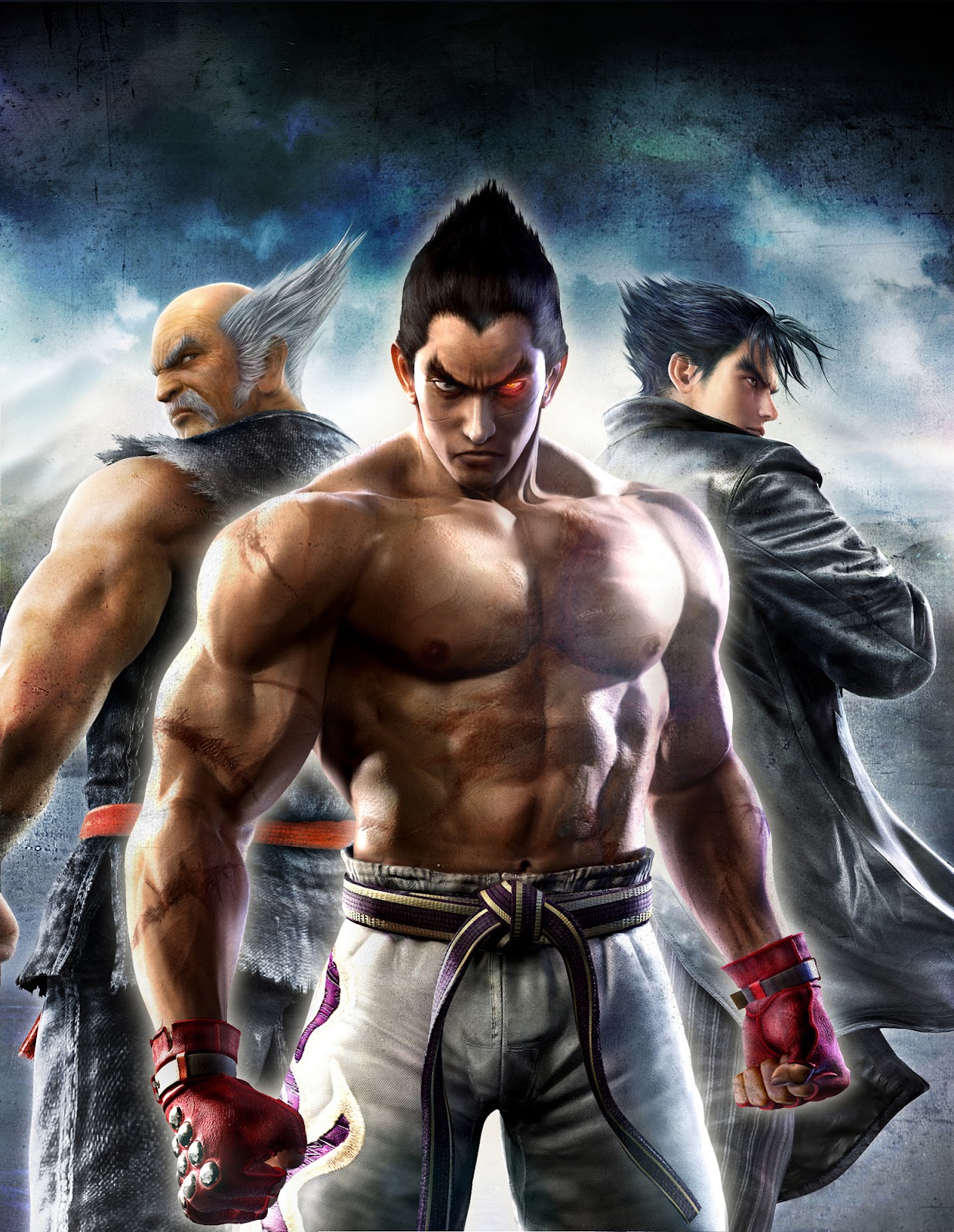
The latest installment claims to conclude the Mishima Saga explicitly.
The usual fighting game schtick is that each character has their own story where you play against particular computer opponents, tackle a final boss― think Azazel in Tekken 6― and unlock the character’s ending. Bandai Namco chose to drop this method, opting for a story implementation similar to Dead or Alive 5 and Injustice 2, while adding their own flair.
The Main Story mode covers the Mishima Saga via an unknown narrator. The narrator is a reporter with a vendetta against Jin and plenty of time to spare for detective work. His digging for clues and answers leads him to various encounters with characters from the Tekken 7 roster. Only these characters are playable in the Main Story mode as they push the plot forward. Players jump between CG cut scenes and actual fights fluidly. If a Jack-6 executed a swinging arm maneuver toward Heihachi during a CG shot, that attack still continues in your direction at the impending fight’s start. This keeps players on their toes and actually makes the cut-scenes worth watching. A player will be hesitant to skip the cut-scene if that is the only clue to the attack they must avoid.
My only issue with Main Story mode is that your character control is limited by the scenario. The mode acts as a tutorial for basic character combos, Rage Drives, Rage Arts, and other new game aspects. The problem is that a particular character’s full command list may not be available for input. For example, some episodes would not allow grabs or Rage Arts because they had not been introduced yet. This might make the game more accessible for new players, but an absolute pain for others that actually know how some characters work. If Akuma is wide open and charging an attack, I should not miss― also known as “whiff”― several grab attempts due to this mechanic. Yes, this is a gameplay concern, but it occurs in Story Mode and directly affects your progression.
Anyone questioning games as an art form should sit through Tekken 7’s Main Story mode. The final battles and scenes before the credits roll were powerful and moving. The gravity of what you witness leaves you mouth agape, questioning where will Bandai Namco go from here and when?
Graphics
Ah, now for the part that is thrown in our faces with every game/console release: how does it look?
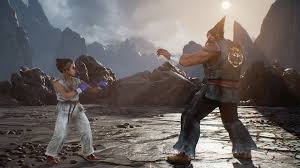
Overall, Tekken 7’s graphics make pristine use of the Unreal Engine 4. Character movements are not choppy or broken, the CG cut scenes to gameplay transitions are smooth, and you can see every little rage wrinkle on Heihachi’s face. Each strand of Lars’ Goku-esque, visual-kei hairstyle is clear and flowing. The big picture is inspiring, but the smaller picture leaves more to be desired. Face model quality appears to differ based on the character you play with. Lucky Chloe, Kazuya, Akuma, Heihachi, Jin...they look complete during their win animations. Their faces are emotive and fleshed out. Look at Lili or Lars’ win animations, and the characters’ faces look like paper mask print outs. Lili’s fingers are reminiscent of PS2 era classics. You know the rectangular fingers that are stuck together like Mattel’s Barbie hands.
If the loading screen before a local match is long enough to smear peanut butter on one slice of bread, there is no reason some characters should be incomplete. It gives the impression that some of Tekken 7’s roster received special treatment. But hey, do not take my word for it. Check out this XBox One Arcade gameplay of Lili and tell me what you think.
This might seem like sweating the small stuff, but we live in an era where games traverse the line between real and imaginary daily. Playing favorites with character model quality could influence a player’s fighter choice.
“Prepare for the Next Battle?”
Yes, you damn well should! I give Bandai Namco a hard time about the input mechanics and graphics, but that is only because I appreciate the Tekken franchise and Bandai Namco’s work. I mean, I have been playing their games since long before the companies merged together. I remember a Soul Calibur without charges and guard impacts. Delayed inputs did not discourage playing multiple local multiplayer matches for three hours a sitting and having a genuinely fun time. Also, let it be known that Tekken’s official Twitter account, @TEKKEN , has been responsive and alert to fans inquiries since the official launch last week. I look forward to observing how the team handles the console release quirks and DLC, if any.
Tekken 7 for the XBox One has been an entertaining learning experience here at Twilight Horizon home base. Do you have any gripes or notable appreciation for the new installment? Leaving a comment below or share your feedback via @Xminess . As always,
Until Later Guys,
^_^
Want to join other fighters in the next battle along the Tekken World Tour? Go here www.tekkenworldtour.com for tour schedule information and details.
Source: Bandai Namco Entertainment. 8 June 2017. https://www.bandainamcoent.com/games/tekken-7
